Publication
In Search of Artificial Reflections: How AI Becomes a Designer’s Mirror

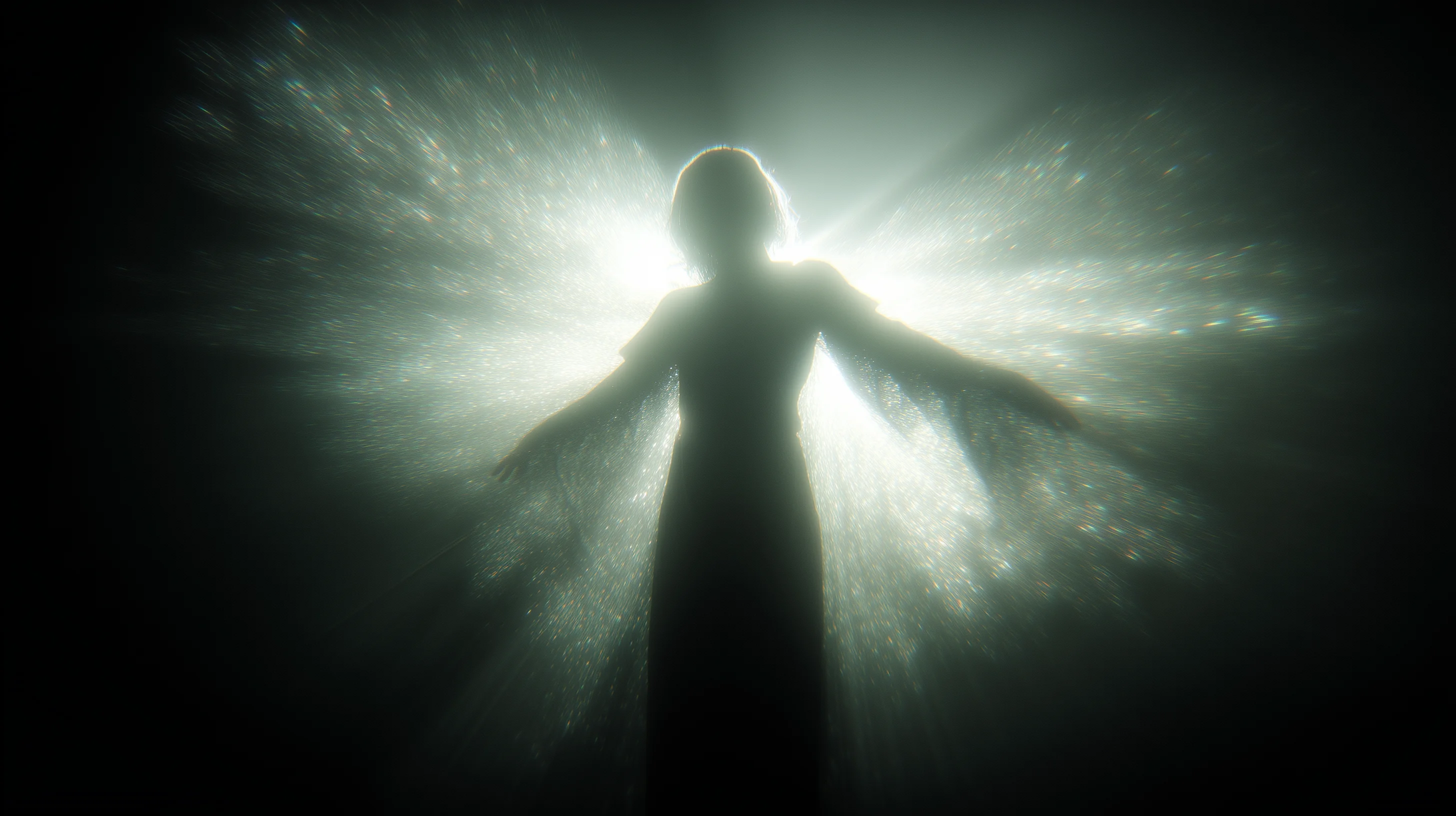
Prologue: In the Hall of Endless Mirrors
Imagine a long corridor lined with polished mirrors. With each step, you see countless reflections—each mirroring your movements, yet subtly altered by angle and light. This corridor is a fitting metaphor for generative AI. It doesn’t invent entirely new worlds; instead, it endlessly reflects fragments of lived experience, rearranging them into something unrecognizable yet strangely familiar. Unlike humans, bound by time and energy, the machine becomes a kind of conduit for infinity—ceaselessly generating echoes without pause or fatigue.
A designer stepping into such a corridor feels three immediate impulses: awe, unease, and a flicker of déjà vu. But why peer into the machine’s mirrors at all? Because this is only the beginning of our encounter with a startlingly human-like technology—one that, in reflecting us, helps us rediscover the sound of our own thoughts.
“The machine reflects us endlessly—and we’re learning to recognize the sound of our own echo.”
Four Emotions in Front of the Mirror
Fear — The Reflection as a Monster
The first reaction of any creative person to a new technology is often apprehension. The stories of Luddites smashing machines weren’t just folklore—they’re recurring archetypes. Today, fear sounds like: “AI will replace us,” or “Clients will be happy with just one prompt in Midjourney.”
But look closer: the fear isn’t really about losing a job—it’s about losing our uniqueness. The deeper anxiety is this: what if an inseparable part of my identity can be reproduced at the press of a “generate” button? To escape the grip of this monster, try reframing the question—from “What will I lose?” to “What can I create that the machine can’t see without me?”
The Temptation of Laziness — The Mirror as a Fast-Food Dispenser
When you realize a machine can churn out hundreds of moodboards in seconds, the temptation to stop thinking is real. But a lazy glance in the mirror distorts the reflection: instead of a clear image, you get a blurry shadow, an empty auto-cliché.
Here, the “tilting bowl” principle matters: the more routine tasks you offload to algorithms, the more creative energy must go into concept, narrative, and intent. If that balance is lost, AI collapses into a set of banal templates—and the designer into a prompt operator.
Thrill — The Mirror as a Maze of Possibilities
Thrill takes over when curiosity replaces fear. The designer starts to play, blending styles, dissolving boundaries. They write absurd prompts, fuse Vermeer with vaporwave, mix samurais with Art Deco—and revel in the ecstasy of unpredictability.
Thrill is precious fuel, but there’s a risk of overdosing on novelty. Without a guiding vision, the stream turns into a carnival of noise. The creative breakthrough happens when the designer’s intuition seizes one image out of a hundred—and turns it into a story.
Freedom — The Mirror as a Space for Infinite Reflection
Freedom arrives when you realize the mirror is only a support. As Lorca once said, “Poetry is born from the desire to shatter the mirror.” For a designer, freedom is the ability to break out of the familiar and leave behind a trace of living intent.
Freedom is the synthesis of all previous states. It begins when fear becomes respect for the tool, laziness becomes time saved, thrill becomes discernment—and the mirror becomes a space for deeper reflection.
To Fight or to Dance?
Fighting your reflection is like boxing with your own shadow on a white wall. The brighter the spotlight of innovation, the longer the outline of fear. But a shadow can’t deceive you—as long as the light is your ally and you’re the one directing it.
History is clear: the printing press scared scribes, the camera unsettled painters, the digital tablet worried master lithographers. Every new tool first strikes at our romantic attachment to the familiar. And yet, within a decade, that same tool becomes part of the classic creative language.
Resistance often rests on a myth—that creativity is a finite currency. That if the machine takes on some of the work, the designer will be left empty-handed. But industry experience tells a different story: the “idea ecosystem” grows.
“The mirror won’t vanish as long as the light is on. So why switch it off?”
A Game of Two Reflections: Practical Alchemy
To keep from getting lost in the hall of endless mirrors, you need a choreography—a kind of dance algorithm.
Start with “Why?”
The key question is always why. Why should this visual exist? What emotion is it meant to evoke?
Treat prompts as a conversation, not a command.
Neural networks respond better to metaphor, contrast, and rhythm than to dry bullet points. Think of prompting as creative dialogue, not a task brief.
Limitations over chaos.
Choose one constraint—like two-tone posters only, or visuals inspired solely by Dziga Vertov. Boundaries force the machine to play your game, not the other way around.
Curated selection.
Hundreds of images aren’t the result—they’re raw material. The designer becomes a surgeon, extracting the “healthy organ” to graft onto a new body of meaning.
Craftsmanship in the final 20%.
The last stretch—color grading, kerning, layout rhythm—is still human territory. These subtle details shape the “handmade signature” that no machine can replicate.
That’s how two winning variables emerge: speed and depth. The machine delivers the first; the designer brings the second. The ones who succeed are those who know how to play both cards.
The Philosophy of Reflections: Narcissus and Plato
The ancient myth of Narcissus offers a warning: you can fall in love with your own image and drown in the pool of self-contemplation. AI carries a similar risk—spend too long admiring generated beauty, and you may forget there’s a real viewer on the other side.
Plato’s allegory of the cave tells the opposite story: people see only the shadows of ideas. The designer’s task is to lead the viewer toward the light of archetypes. AI can accelerate that journey—it illuminates all possible shadows at once. But choosing the true form remains a distinctly human privilege.
“The machine multiplies illusions; the human seeks the best among them.”
The Shadow Economy: Why the Alliance Will Win
In business, design is measured along two axes: time-to-market and emotional precision. The equation is simple:
Creative Value = (Conceptual Depth × Emotional Accuracy) ÷ Production Time
AI dramatically reduces the denominator—but that’s only half the formula. If the numerator (meaning) is zero, the outcome is still zero. That’s why resisting the tool is pointless—but blindly surrendering to it is just as risky.
The winning teams will be those where humans remain the authors of meaning, and AI acts as a catalyst for form. Market research already shows that when designers actively use AI assistants, project rollout times drop by 30–50%—without sacrificing quality. But analytics also reveal that the highest-performing layouts, in terms of click-through rates, are the ones where designers manually adjusted key elements, preserving a touch of “human imperfection.”
Epilogue: The Mirror After Midnight
When the studio empties out, the mirrors keep reflecting the dark. By morning, the designer will return—bringing new light shaped by a new task. The shadows will stir again, as fear and thrill take their places side by side.
The most important thing to remember: a reflection doesn’t exist without someone to look. A neural network won’t come alive without a mind willing to infuse the prompt with feeling, contradiction, and nuance.
You don’t need to fight the reflection—just learn to dance with it, so each step draws a new line rather than repeating yesterday’s. The mirrors may be infinite, but the glow the viewer sees in them—that spark is always yours.
Look into the machine—but seek only your own light. Everything else is just noise in disguise.