
Publication
Biotech Website Development: Key Principles and Real Case Studies

A high-performing biotech website must simultaneously:
- explain complex technologies clearly,
- build credibility and trust,
- reduce user anxiety around medical topics,
- communicate products and scientific expertise, and
- support partner and investor acquisition.
Below are the core principles behind successful biotech web development, along with real project examples demonstrating how they work in practice.
Scientific accuracy and clarity
In biotech, there is no room for ambiguity.
Information about enzymes, cells, research pipelines, or clinical trials must be scientifically accurate — yet still accessible to a broader audience.
A designer and a copywriter share one key responsibility: to build a bridge between scientists and decision-makers such as investors, partners, and healthcare professionals.
Complex processes should be explained clearly, without oversimplifying or distorting the science.
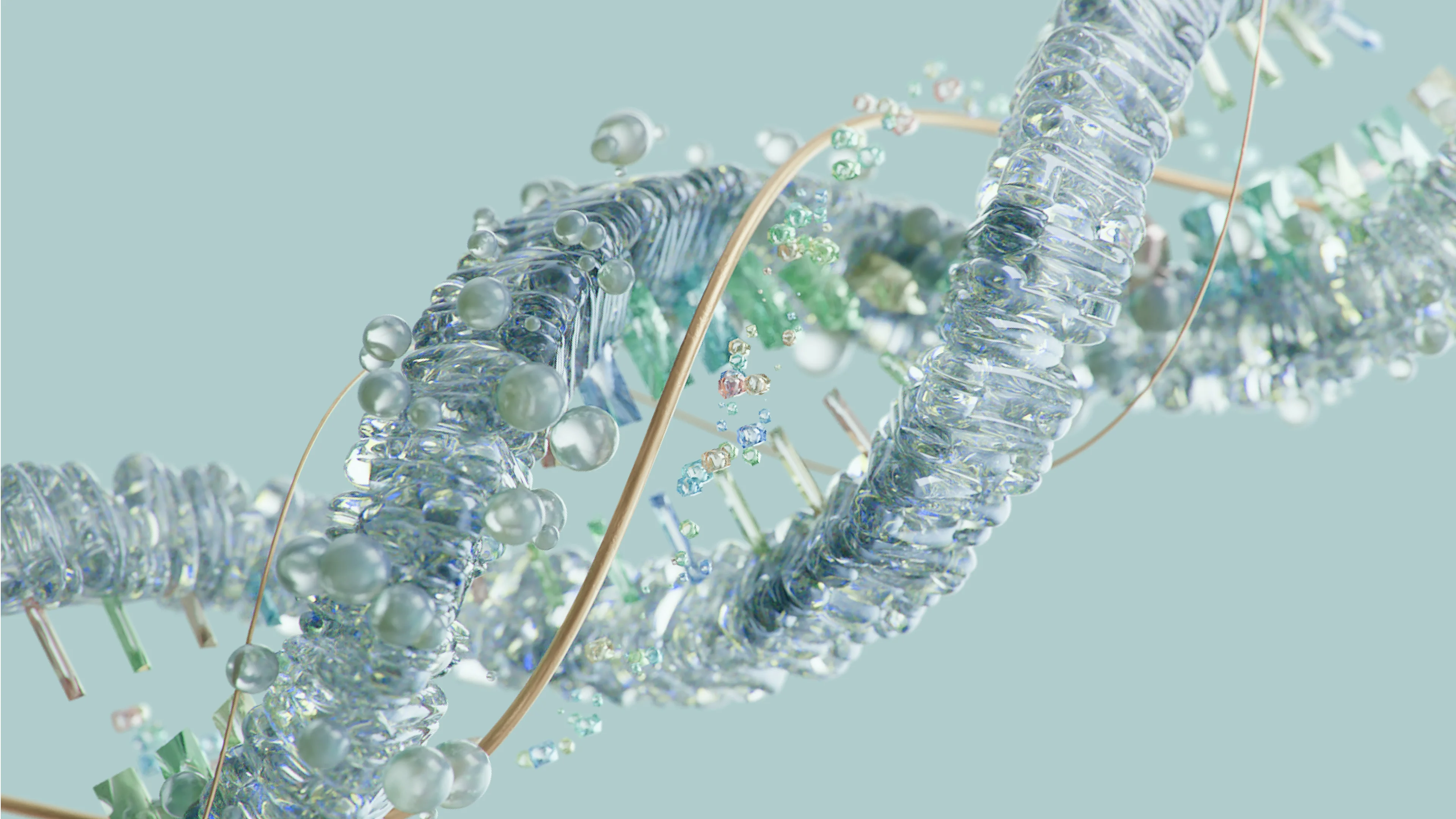
Visual communication works especially well — through diagrams, 3D renderings, and micro-animations.
Visualization of the “invisible”
Unlike many other industries, biotech deals with phenomena that cannot be photographed or shown directly.
How do you illustrate a microbiological process or cellular interaction?
The answer lies in scientific visualization.
Biotech and research-driven companies rely on:
- 3D models of bacteria, molecules, and cellular structures
- microscopic renders
- explanatory infographics
- animated videos of laboratory processes and mechanisms
These tools turn complex science into a visual language anyone can understand.
Strong visualization becomes a proof of competence — showing not only what the technology does, but that the team truly understands it.
Reassuring UX and a sense of safety
A biotech website should feel calm, precise, and free from unnecessary visual noise.
Here, UX design is not about a “wow” effect — its goal is to support the user’s emotional comfort and confidence.
Medical and genetic topics can naturally trigger concern or skepticism, so the interface must communicate trust. This is achieved through:
- clean, structured layouts
- neutral and clinically-coded color palettes
- predictable and intuitive navigation
- subtle, controlled animations
These elements help users feel that the company is competent and in control — which, in turn, makes the experience feel safe and trustworthy.
A high-tech image and a global standard
For biotech companies, it’s essential to be perceived as truly high-tech.
Partners, investors, and scientific institutions evaluate a website almost as closely as they do publications or research data.
Modern design, fast performance, precise typography, and a clear information structure all signal discipline, quality, and maturity.
A website ultimately becomes a reflection of the company’s R& D culture and technological rigor.
Case studies: how these principles work in practice
Biotech Artlife — visualizing microorganisms
The company develops microorganisms, enzymes, and their metabolites.
The main objective was to present the biotechnological process as a living, evolving system.
We implemented:
- 3D renderings of bacteria as the core visual element
- a layered screen transition effect that creates depth and immersion
- an interactive microscope lens, allowing users to examine structures up close
This approach makes the viewer feel like they are observing a real laboratory workflow — not just browsing a website.
The project received an international award from CSS Design Awards, as well as first place in the Runet Rating.
Takeaway: Visualization turns invisible science into a compelling and tangible experience.
Designed Cells (South Korea) — communicating safety and innovation through aesthetics
The company specializes in stem cell technologies — a field that can be perceived as sensitive and complex.
Our main goal was to build trust in the science, while keeping the user experience calm and approachable.
We delivered:
- a soft, clean UI that reduces cognitive load
- visualizations of molecules, chromosomes, and DNA
- smooth 3D animations illustrating scientific concepts
- a sophisticated serif typeface to reinforce an academic and premium tone
This design strikes a balance between technological innovation and human-centered communication.
The project received recognition on Behance and resulted in an inbound request from Samsung Biotech.
Artlife — 25th anniversary website
The anniversary website for one of the largest biotech manufacturers became a digital presentation of the brand, rather than just a commemorative page. It combines storytelling with a strong technological image.
Key design solutions:
- animated particle-based 3D scenes representing each business direction
- an interactive map showing international presence
- a unified visual language that inherits the style of Biotech Artlife
The website is actively used in negotiations and partner presentations — it serves as a strategic communication tool for showcasing the company’s scale and evolution.
Control (California) — precise pharmaceutical design and responsible product communication
The company produces plant-based medical products and was launching a new line in a highly regulated market.
The challenge was to present the brand as scientific and trustworthy — not as a lifestyle story around a controversial product.
We focused on:
- Swiss minimalism — strict grid, clean typography → a sense of pharmaceutical precision
- controlled pixel/WebGL effects — a metaphor for regulatory transparency and technological oversight
- responsible UX — including age-verification and discreet, compliant product presentation
- The result is a website where modern animations serve trust and credibility, not entertainment.
The project received website of the day on Awwwards, CSSDA, and FWA — proving that thoughtful design can help brands stand out even in the most sensitive niches.
Daigo (Japan) — scientific value expressed through cultural context
Daigo is an organic health brand built around the philosophy of balance and longevity.
We visualized the product through Japanese cultural symbolism and the idea of an endless natural cycle.
A combination of cinematic video and minimalist design creates a sense of harmony, while subtly emphasizing the brand’s scientific foundation and authenticity.
How to choose a biotech web development partner
Here are the key criteria that advanced biotech companies typically evaluate:
- Experience working with scientific organizations and medical brands
(ability to handle complex terminology and regulations) - Strong skills in visualizing processes
including 3D, scientific diagrams, and micro-animations - Understanding of “soft-medical” UX
— how to reduce anxiety and communicate sensitive topics responsibly - Fluency in B2B and investor-focused communication
so the website can support partnerships and funding discussions
Conclusion
A biotech company’s website is not just a showcase — it is a digital counterpart to the laboratory, where scientific credibility is demonstrated and reinforced.
It must:
- explain complex concepts clearly
- communicate precision and rigor
- build confidence and trust
- reduce anxiety around medical topics
- support partnerships and market positioning
- be ready for an international audience
In biotech, success belongs not only to those who create groundbreaking technologies, but also to those who can communicate them clearly, innovatively, and with emotional intelligence.
Natural processes are remarkable on their own — and design should visualize them in a way that sparks curiosity rather than concern.
Those who can beautifully convey the innovation and purpose behind their science will stand out in a competitive market and earn the trust of partners, investors, and patients faster.