Publication
We Don’t Create, We Destroy: How We Developed a Creative Website for Our Design Studio Without a Key Visual and Still Stood Out

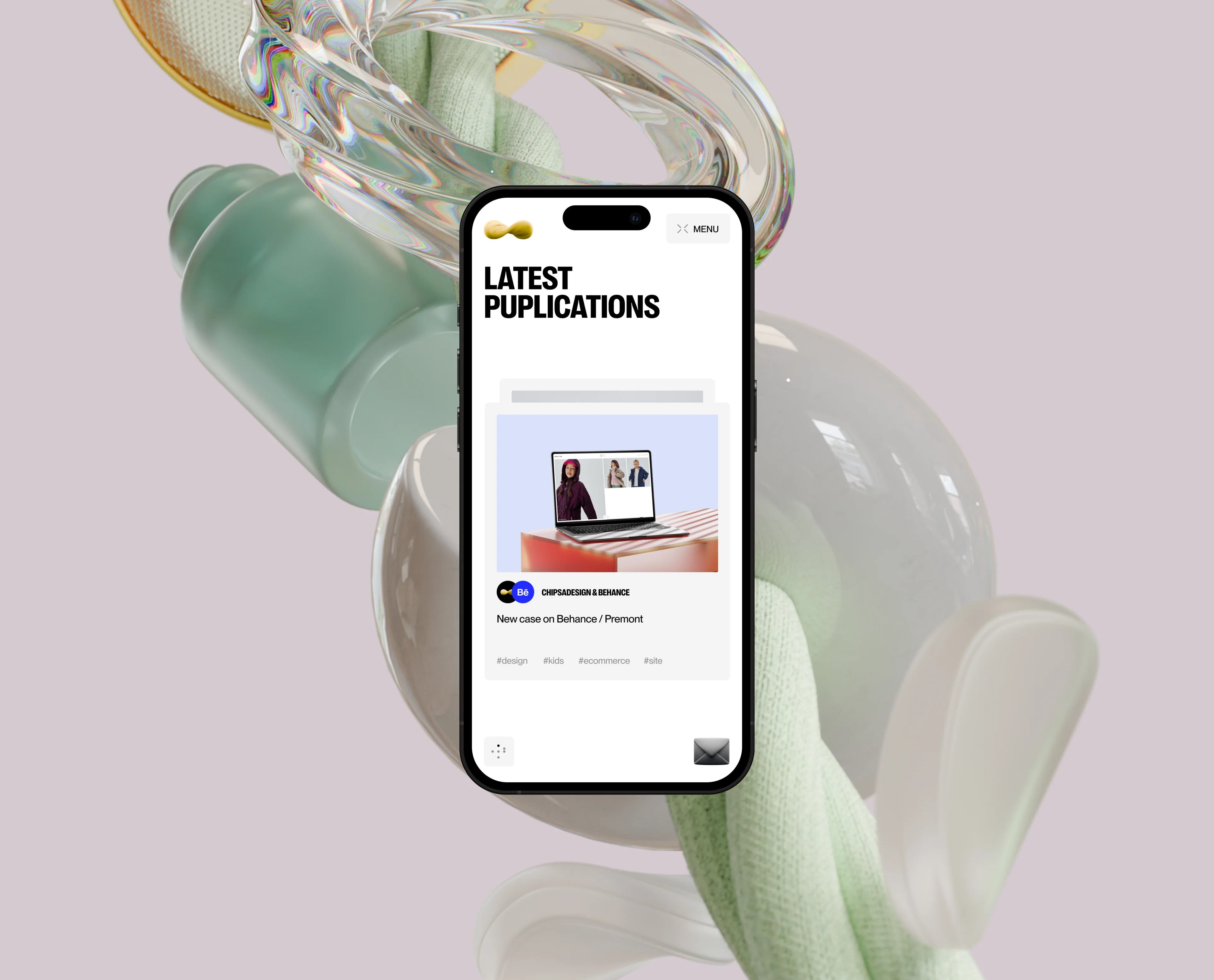
Why the Design Matters When Creating a Website for a Design Studio
Typically, before developing a design studio website, companies establish a clear positioning and then build the visual concept around it. We took a different approach: the final ideas became fully formed when the overall look and feel of the website was nearly complete. It was a kind of “closing the circle”—the meaning and the design evolved in parallel and merged into a single entity.
Our main objective was to develop a creative website that would showcase both our design expertise and the technical capabilities of the studio. Simply put, we wanted any potential client visiting our website to instantly see that we tackle complex creative challenges and do so “unlike everyone else.”
A Creative Website: How the “Destruction” Concept Was Born
To stand out in the sea of design agencies, we decided to do the opposite—“not to create, but to destroy.” This idea drove our visual concept. We wanted to avoid an overloaded interface full of animations and special effects, focusing instead on 3D content that would bring to life our spirit of creative experimentation.
We aimed for a website that was structurally “simple” yet visually rich. In particular, we considered having 90% of the homepage dedicated to 3D elements. We also brainstormed a variety of interactive features:
- An unusual menu for page navigation
- Dynamic award renders, where the material changes each time the page refreshes
- A client chatbot
- Posts in the format of a “mini social network” within the site
- A case switcher, and much more
All these ideas were united under the theme of “destroying in order to create something new.” Although we couldn’t implement half of what we initially planned, the most essential elements still found their way into the final version.
The Emphasis on 3D Content: Why It Was Crucial
When we set out to build a creative website for our design studio, we wanted to highlight our bold technical skills and unique style. 3D content is a powerful tool for delivering a “wow” factor that captures attention. At the same time, we worked to ensure that the 3D visuals weren’t just there for the sake of it, but integrated smoothly with site navigation and textual content.
Choosing a “Stone” Theme
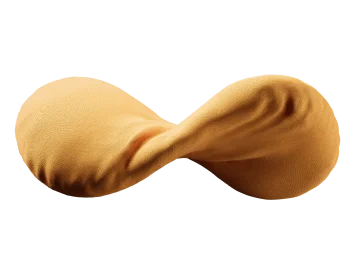
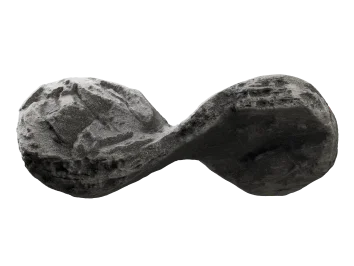
We created a signature 3D object—the “Chipsinka”—and decided to use stone as its primary material. Stone perfectly symbolizes the idea of destroying the old to make way for the new. Shattering stone looks epic and conveys the scale and seriousness of our processes.
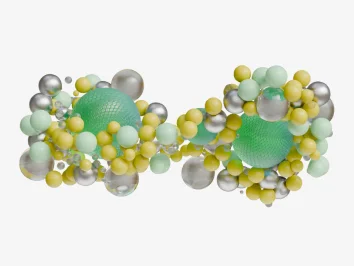
Initially, we planned for the “Chipsinka” to continually transform—switching from stone to paper, plastic, glass, metal, and so on whenever the user hovered over it with their cursor. However, we had to postpone this experiment due to time constraints. Even in its simpler form, this element still makes a powerful statement.
Overcoming Challenges in Creating a Creative Website
Despite our best efforts, we encountered a few bumps in the road. Here are the main hurdles we faced.
1. Experimenting with Animations
Usually, we handle animations in-house, but this time we decided to delegate some of the work to our developers. Theoretically, this would streamline the process and create a template for future client projects where developers might take over the animation tasks. However, things turned out to be more complicated: without a fully fleshed-out motion prototype, it was hard to explain exactly what kind of animation we wanted for each section.
2. Aligning Ideas Within the Team
Every creative mind in the studio had their own wishlist and vision for a design studio website. When discussing a creative website, opinions often clash: one person might find an idea brilliant while another thinks it’s too radical. Consequently, discussions dragged on, making it difficult to focus on finalizing the design.
3. The Scale of the 3D Content
This was our first project featuring such extensive use of 3D elements. Coordinating efforts with the CG artist was challenging, especially since multiple tasks were in progress at once and 3D work often requires a clear roadmap to fit seamlessly into the overall UI/UX. Eventually, we devised a system outlining specific materials, colors, and guidelines for visual effects. Only then did the project truly pick up momentum.
The Results: What a Creative Website Brings to a Design Studio
Although we only managed to implement about half of our original ideas, the outcome impressed not just us but our clients as well. The site features a clean, minimalist look with large typography and a mostly monochromatic color palette accented by bright highlights. The high-tech 3D blocks fit into the minimalist layout and don’t distract users from the content.
- Minimalism and Lightness. A clear grid, thoughtfully placed accents, and plenty of white space make the pages both readable and memorable.
- Captivating Content. Even we, who created it, sometimes find ourselves mesmerized by the animations and transitions.
What’s Next: Further Website Development and New Ideas
In our next article, we’ll dive deeper into the technical side and talk about the development process itself—how we merged 3D graphics with web technologies, what hardware and software we used, and how we tackled optimization to keep this design studio website efficient and user-friendly.
In the meantime, follow our X channel, where we regularly share behind-the-scenes insights, surprising case studies, and curated collections on creativity and design. Thanks for reading—here’s hoping our experience inspires your own unconventional and innovative approach to website creation!